
Washoe County Previous Residents Sources
The best source depends on the time period and the question. A recorded deed gives a title transfer, not an occupancy list. A city or reverse directory can place a printed household at an address for a particular year, while a census adds a household snapshot on its enumeration date. Local newspapers and obituaries can provide a move, death, relationship, or community notice. Start with the source nearest to the era under review, then keep the parcel identifier, document number, directory page, or newspaper date with every result.
| Source | Years it covers | Where held | What it shows |
|---|---|---|---|
| Recorder real-property index | November 1991 to current | ICRIS | Party, document, and recording-date trail |
| Recorder online images | August 16, 1999 to current | ICRIS | Watermarked document image for the indexed image period |
| Recorder books and microfiche | Before November 1991 | Recorder counter | Earlier recorded instruments and map-index leads |
| UNR Recorder digitization | About 1855-1964 | UNR digital collections | Selected land, lien, cemetery, court, and property books |
| Washoe Library directories | Local holdings, exact run not published | Downtown Reno Library | Historical names, addresses, occupations, and phone clues |
| Federal census | Public schedules through 1950 | NARA and authorized databases | Household details and census-date geography |
| Sanborn maps | Reno January 1885, five sheets; other editions vary | Library of Congress and UNR catalogs | Building and street context, not occupancy |
Use the current parcel to anchor the early work, then add the household evidence only when the date fits. Note: A property owner, a deed party, and a person printed at an address can be different people.
Washoe County Parcel Records Start
For an address-history search, begin with the Washoe County Assessor CAMA search. It accepts owner name, situs address, APN, and Assessor book/page. A result list shows a number, APN, situs, and owner. The parcel card can add the legal description, map link, last document date or status, sales and transfer entries, and property characteristics. Save the current situs, APN, legal description, owner, and latest transfer row before moving to the Recorder. The situs is the taxed property's address. The owner's mailing address is for tax correspondence and may be elsewhere.
The Recorder APN-search guidance explains an important Washoe County address-history limitation: APN indexing began in 2016 and can attach related documents incorrectly.
Use an APN as a helpful bridge, then verify a document against the legal description and the actual recorded instrument.
A legal description identifies the lot, block, subdivision, or metes-and-bounds land description used in recorded documents. It often survives a street-name or numbering change better than an address. Assessment data is for assessment purposes, so it should be treated as a starting record, not a final conclusion about who lived at the property.
Washoe County Previous Residents Deed Trail
After locating the current owner and last transfer, use the Washoe Recorder's ICRIS index to follow recorded title backward. ICRIS is a party-and-year search, not a street-address search. The Recorder asks for a name in last-name, space, first-name order without a comma, plus an approximate recording year. Search the current owner as a grantee, inspect the purchase deed, and compare its legal description to the CAMA parcel. The seller on that deed becomes the next person to search as a grantee in an earlier period.
- Write down the current owner, APN, legal description, and recent transfer details from the Assessor card.
- Search that owner as a grantee in ICRIS near the likely purchase year, using the Recorder's no-comma name syntax.
- Open the deed record and preserve the grantor, grantee, recording date, document number, and legal description.
- Search the prior grantor as a grantee in an earlier time window, comparing the same legal description or lot and block at each turn.
- At the online cutoff, take the party names, dates, document numbers, and legal-description clues to the Recorder books or microfiche.
- Grantor
- The person or entity transferring an interest in a recorded document.
- Grantee
- The person or entity receiving that recorded interest.
- Chain of title
- The sequence of recorded transfers connected by parties, dates, and the same legal parcel description.
- Legal description
- The formal land description in a deed or map, used to test whether old and new address references identify the same parcel.
The Recorder office-functions page describes the recorded groups and historical access behind this Washoe County title trail.
The Recorder is the title-document source, while the later directory and census stages address who may have occupied the property.
Washoe County Recorder Record Cutoff
The online real-property index begins in November 1991, and online images begin August 16, 1999. That difference changes how a Washoe County historical title search should be read. A pre-1991 result may require a counter search even when a later deed is visible online. A record between November 1991 and August 1999 may have an index hit without an online image. Free online images are unofficial and watermarked; the Recorder lists plain copies at $1 per page and certification at an additional $4. Keep a document number with a copy request.
The Recorder FAQ gives the local search and copy guidance for the Washoe County deed sequence.
Its name-format instruction is worth following exactly before treating an empty result as proof that a title document does not exist.
Washoe County Recorder Records Trail
When the online deed trail reaches November 1991, continue through books, microfiche, and the cumulative map index at the Recorder rather than stopping. The inspected county sources do not publish the exact historical book sequence or a complete counter-retrieval procedure. Bring the party names, approximate recording years, document numbers, and legal-description clues gathered from later records. The Washoe County Recorder lists its office at 1001 East Ninth Street, Building A, Reno, with the public record contact route and weekday hours.
Recorder staff do not perform the entire historical search for a requester. A narrow request is more practical: identify a deed party, approximate year, and document or parcel clue. If a needed county record is not online, Nevada's Public Records Act, NRS Chapter 239, permits a request to the custodian. The general response rule is by the end of the fifth business day, though custodian-specific copy and certification fees can apply.
Washoe County Previous Residents Household Trail
Ownership is only one layer. To find people who lived at an address, ask the Downtown Reno Library whether it holds a reverse or criss-cross directory for the year. That kind of directory starts with a street and address, then leads back to an ordinary name entry with details such as a spouse, occupation, phone number, or owner/renter notation. The public library pages do not give an exact reverse-directory title or year span, so confirm the volume before relying on it. The collection details and entry-reading method are developed in the Washoe County city directory material.
- Locate the address in a reverse or criss-cross directory, if the library confirms one for the target year.
- Read the ordinary directory entry for the printed name and preserve the year, publisher, page, address, and abbreviation key.
- Compare two or three adjacent years, because a move, marriage, death, or boarding arrangement can change the line.
- Pair the address with the 1910, 1920, 1930, 1940, or 1950 census that fits, allowing for enumeration dates and shifting boundaries.
- Use an obituary, cemetery record, or probate docket as an endpoint, then distinguish a documented fact from an inference.
Washoe Library's obituary catalog covers about mid-1962 through September 2007, while its newspaper microfilm reaches farther back for several titles. A gap in the obituary catalog is a reason to search the papers, not a conclusion that a notice never appeared.
Lawful use. Washoe County address-history research is suited to family and house history, estate questions, and personal curiosity. Do not use a historical address trail to stalk, harass, or harm a living person.
Washoe County Historical Records Bridge
UNR offers a valuable bridge across the Recorder's online gap. Its preservation collaboration digitized 20 volumes from a much larger Recorder collection of roughly 4,000 volumes, with material dated about 1855-1964. The selected material includes land transactions, homestead claims, liens, cemetery plots, court judgments, women's property records, and inventory books. It can connect a family to a parcel or cemetery record, but it does not represent every volume in the larger collection. Compare an old volume's place name, book title, page, and record date against the parcel trail.
The UNR collections-data page describes the digitized Recorder volumes that can support Washoe County address-history research.
These selected records offer historical context when a deed book, cemetery plot, or property relationship predates the modern online index.
This contrast is a Washoe-specific records quirk: the online real-property index begins in 1991, while a small digitized set reaches back to about 1855. Neither source replaces the other. The party-and-year Recorder chain and the historical collection work best when their dates and legal parcel details agree.
Washoe County Sanborn Records Context
Sanborn fire-insurance maps answer a different question from a directory or deed. The Library of Congress holds a Reno map dated January 1885 with five sheets. Such maps can show a building's footprint, material, height, use, windows, doors, streets, and lots. They can help determine whether a structure stood at a given time or how an old street corner was arranged. They do not name an occupant, so pair a map with a directory line, deed date, newspaper notice, or census entry.
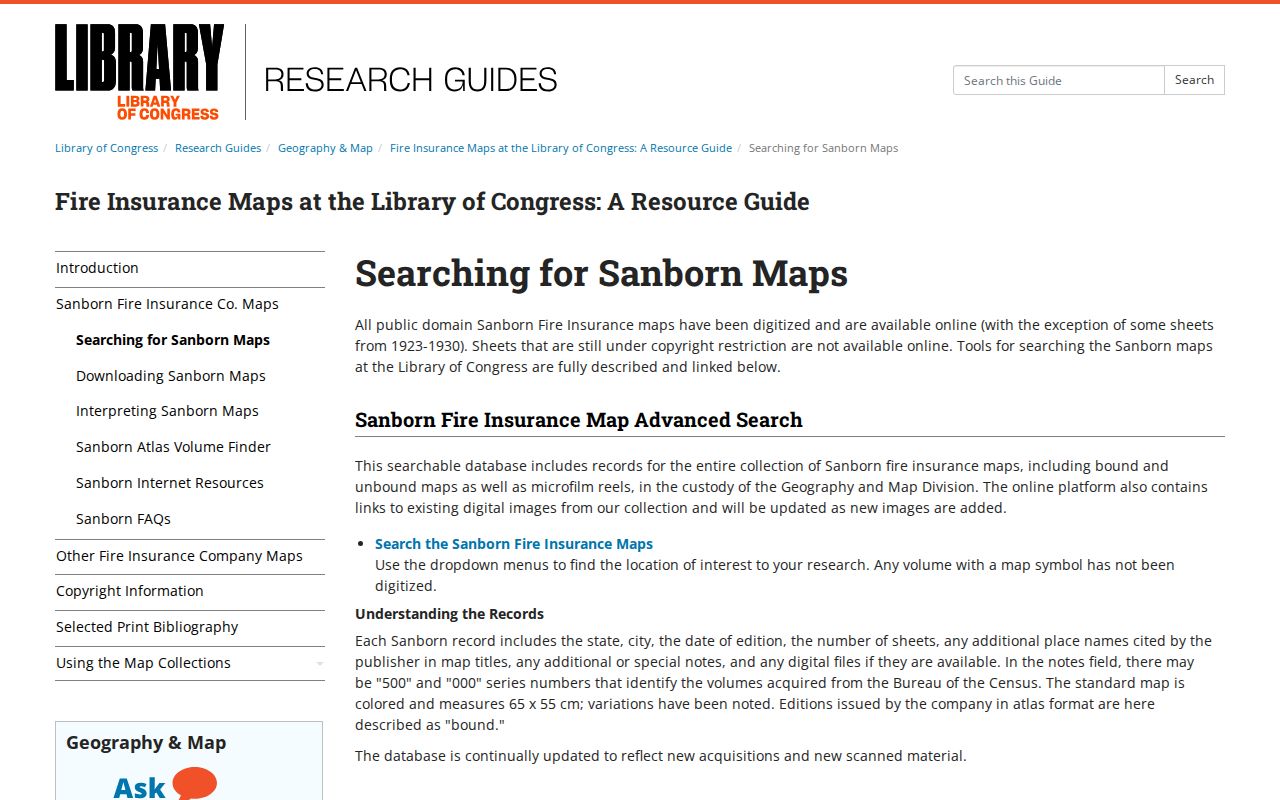
The Library of Congress Sanborn guide explains how to interpret the map records used for Washoe County historical address context.
Use the map to date the building or street layout, then return to people and title sources for the household history.
Washoe County Address Records Shifts
Older Washoe records can use address forms that no longer match a search box. Reno's numbering system uses the Truckee River as the north-south divider and Virginia Street as the east-west divider, with block increments and downtown exceptions. Street names can change as well. Regional Street Naming Committee minutes record 2021 Experience District changes, including Roselite Drive to Red Drive and Great Park Avenue to Experience Avenue. Search the old and new street names, then use the parcel, legal description, lot and block, or subdivision map to prove the connection.
There is a second historical location change to consider: county archives and offices moved from Washoe City to Reno in 1871. An early document may therefore use a place label that differs from later custody language. Note: Record both the historical address wording and the modern parcel reference so a future check can show how the two were matched.